
Patrick’s eldest son, William, enlisted in July 1940, a month before his 20th birthday. This was just after the evacuation of the Army from Dunkirk, and in the early stages of the Battle of Britain. He joined the Royal Air Force. Furthermore, he volunteered for aircrew duties. (All aircrew were volunteers.)
The Military Training Act of May 1939 had required all males aged 20 and 21 to serve for 6 months. After initial training they would be transferred to the Reserve. The outbreak of war meant that their service was extended to the end of hostilities.
The National Service (Armed Forces) Act of September 1939 extended eligibility for military service from 18 to 41. In practice, men were called up in age groups. After the 20-21 group, the next batch was 22 to 27.
Bill volunteered whilst he still had a choice. A sensible move. But did he make a sensible choice?
According to the International Bomber Command Centre in Lincoln (see ‘We will remember them’) 58,438 aircrew were killed during WW2. Of these, over 8,000 of these were killed in flying or training accidents. Some 125,000 men served as aircrew during the war. This represents a loss rate of 47%. Nearly 1 in 2. As bad as those figures may appear, the reality is worse for those serving in the early years of the war. In January 1942 (when Bill joined 142 Squadron) the strength of Bomber Command was 832 aircraft. 80% were medium sized. The fleet required just over 4,000 aircrew.
By January 1945, the size and composition had changed significantly. Most of the aircraft were heavy bombers (such as the Halifax and Lancaster) requiring larger crews. The establishment had risen to 1,840, requiring nearly 12,000 aircrew. The numbers of aircraft rose, whilst the loss rate declined. (4% in 1942, 0.9% in 1945) This means that the 125,000 figure was inflated by men joining their squadrons later on when they were at lower risk.
Bomber Command mounted almost as many sorties in the first four months of 1945 (64,738) as they did in 1941 and 1942 combined (65,658). They lost 599 aircraft in 1945 compared to 2,314 in 1941 and 1942. It was definitely more dangerous to be in Bomber Command in the first part of the war than later on. A few examples will suffice to reinforce the point.
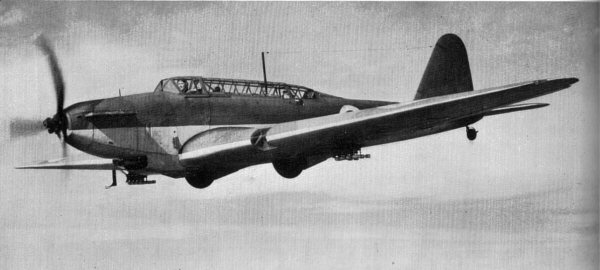 A daylight raid by 22 Wellingtons on Wilhelmshaven in December 1939 saw the loss of 12 aircraft (55%). Four attacks by Fairey Battle light bombers on bridges in northern France in May 1940 experienced a similar loss rate (60 out of 108, 56%). Of the 133 airmen who set out on Operation Chastise (the Dams Raid) in May 1943, only 48 (36%) survived the remaining two years of the war.
Bill, presumably advised by Patrick, must have reasoned that anything would have been better than the infantry. The reality was different. Of course, when he volunteered, no one knew how the war would develop. No blame could be attached to Patrick. I do wonder whether he blamed himself, at least in part, for the death of his son.
Exact figures are hard to find. Probably no more than 10% of those serving in Bomber Command in 1939 survived the war. This is similar to the picture described in ‘Medal Ribbons’.